My name is Andrew, currently a full time student in Bachelor of Marketing from Royal Melbourne Institute of Technology. With the rapid advancement of technology, I strongly believe that Digital Marketing will be an important part of business as more organisations are approaching and reaching consumers through technology platforms. This blog will serve as a platform of discussion to the public to further understand how we can achieve effective marketing.
“Privacy is not an option, and it shouldn’t be the price we accept for just getting on the Internet”
Gary Kovacs, CEO of AVG Technologies
The largest social media platform, Facebook, have shut down 3.3 and 5.4 billion fake accounts in year 2018 and 2019 respectively (Brian Fung, 2019). Although these might seems like a huge numbers, there are still millions of fake account roaming. These fake accounts, known as bots, can greatly affect individual and organisations effectively through positive or negative effects. They can affect political views, ruin business reputation and affect audience mindset about anything.
In this post, I’ll talk about 3 different types of bots used by America social media platform, Twitter and issues on online privacy and online advertising ethics.
Three Types of Bots (Twitter)
Twitter are widely used by many people around the world from celebrities such as Ellen DeGeneres, Kayne West, Beyonce and Justin Bieber to world leaders like Donald Trump and Barack Obama. Not only these people are culture and political influential, a single twitter post by them can greatly affect a individual mindset. Twitter understand these create different types of bots to carry out messages through different channels.
Scheduled Bot – A programmable bot that sends out a messages at a interval of time. This bots create a pulsating effect that creates a constant reminder to the public.
Watcher Bot – a monitoring bot there watches over a account or website and provide immediate relevant information about the changes.
Amplification Bots – These bots helps to boost the messages post online by liking the post, sharing and follow their account.
Privacy
Take a look at your social media platforms now, do you put in personal data such as emails, phone number and residential area? Most of the social media platforms now requires verification information to further confirm that you’re the user, but do you really think it is safe to provide your personal details?
For example, social media platform, Instagram, requires user to take a photo of the front and back photo of your identification card to acknowledge that you’re the actual user of the account to achieve the blue tick verification. Online shopping websites also tend to prompt users to save their payments method to easy checkout the next time.
This data are actually collected and distribute to different advertiser to further target their audience better. This also means that every personal information you share online are technically known to not just the platform you chose to share, but to many different marketers and can potentially be a threat to you.
Data Responsible And Advertising Ethics
With the consent of the users, marketers have to be very careful with the personal information provided. it is important for them to comply and regulate what personal information to be shared and how the advertisers use them.
Marketers should only use sensitive information of the user and understand the channels of communications to the user. This information also have to be accurate and up-to-date. Information should not be kept for longer of time than necessary.
For example, everytime you visit a website for the first time, a file know as ‘cookie’ is downloaded into your computer. This cookie tracks the “digital footprints” of you on the website and tailors what to be shown on the screen for your next visit.
SOUNDS CREEPY RIGHT !?!
Conclusion
In conclusion, users should understand the risk of providing your personal information on any online platforms because what can be convenience to you might be vice versa and used and you. On the other hand, marketers should be very careful with this personal information trusted on them and make suitable and appropriate marketing messages.
Hope you enjoy reading this post and feel free to leave me a comment on your thoughts !
In this post, i’ll share the advantages and disadvantages of Integrated Marketing Communications (IMC) and the five steps of IMC framework.
Integrated Marketing Communications (IMC)
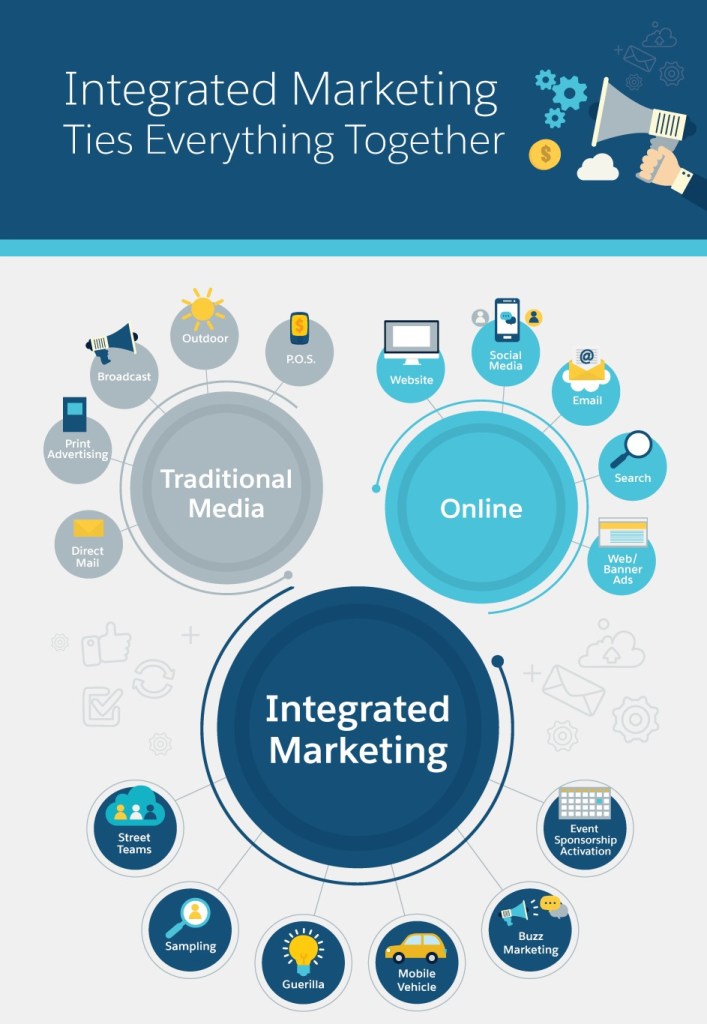
The Integrated Marketing Communications, or known as the IMC, is a combination of online and offline effort of all promotional tools to get consumers awareness and retention for the best results. It drives brand value by managing and maintaining consumer relationships.
Advantages
The IMC have diverse benefits to a business such as creating competitive advantage, boosting profit and sales and promoting brand awareness.
IMC help consumers in the buying process through the various stages. Businesses can understand the consumers better by analyzing their purchasing patterns and time spend. This can better help businesses to develop a dialogue and eventually lead to sales revenue (Marianne Chrisos, 2018).
IMC can also boost sales through several promotional communications tools. Its advertising messages such as direct mails, advertisement and social media platform creates more avenue to reaches its consumers and potential consumers. Thus, causing arousal, building brand awareness and ultimately, consumers making a purchase (Jenna Bruce, 2015).
Disadvantages
However, IMC sometimes can create a backfire towards business as well. Consumers can perceived the wrong information from advertising effort and can misunderstood its intended messages. This can cause public relation issues that are potential harmful to a business.
While information are shared with the general public from your business, it can potentially risk of someone misleading the information in the harmful way. This can damage your business reputation. Thus, keeping tight control of the information shared with the general public and within the organisation is important (Rajesh, 2019).
At another level, too much advertisements and promotion will over-saturate the market and allow consumers to perceive your branding as “CHEAP”! This will send the wrong message to the consumers and can affect your brand reputation and image (Jared Lewis, 2018).
Five Steps of IMC Campaign
Step 01: Clear Understanding of Targeted Audience
“Know thy self, know thy enemy. A thousand battles, a thousand victories.
Sun Tzu
It is important to recognize and understand your target audience as of their purchasing intention, motivation of purchase, how to reach them and how to communicate with them effectively. With these data, you can productively attract these group of consumers.
Step 02: Pick Your Channels
Understand the strengths and weaknesses of all IMC channels is important in this stage. Marketers have to decide which promotional tools channels does the target audience mostly use and deliver the advertising message that can effectively reach the target audience.
Step 03: Have A Consistent Look
Lets be honest here, human beings are animal creature and we like beautiful things that trigger our mind. We tend to remember something we’ve seen before via orientation, size, shape and color recognition (Tea Romih, 2016).
Keep a consistent look for your brand product can help consumers better on remembering your products and create a Top Of Mind Awareness (TOMA) effect. This will build on brand reputation and image.
Step 04: Create Clear, Consistent Content To Suit Different Media or Channel
Be sure to be clear with the words in advertising effort to ensure that target audience received the right message. Engage their interest for all promotional channels in further drive them in searching for your products.
Step 05: Ensure That Promotional Message is Integrated
Last but not least, ensure that your team is working together in sync throughout the promotional period and always keep track of the promotional campaigns. Be ready to adapt to changes and provide immediate remedies to the problem!
Conclusion
In conclusion, IMC play a important role in business marketing by reaching out to target audience and public in creating brand awareness, positive brand reputation and image. Marketers have to clearly understand the uses of every promotional platforms to further boost and better reach everyone. After all the promotional efforts, it is also important to continuing keep track of the promotional campaigns and monitoring sales figure in order to adapt to new market changes.
Which steps of the Integrated Marketing Communications do you think is the most important? Leave a comment and share your thoughts with me!
“Search engine marketing and search engine optimization are critically important to online businesses. You can spend every penny you have on a website, but it will all be for nothing if nobody knows your site is there.”
Marc Ostrofsky, Author of Get Rich Click!: The Ultimate Guide to Making Money Online
Have you ever try searching for something online using some keywords and you find tons of results right in front of you? Do you wonder how does the web organize these results and which website links to be placed on top of the page?
THAT’S RIGHT! Using complex online ranking algorithm, businesses will fight for the top spot to be on the top search engine result pages (SERPs). In this post, I’ll share about Search Engine Marketing (Paid Marketing) and Search Engine Optimization (Organic).
Search Engine Optimization (SEO)
The Search Engine Optimization, or known as the SEO, is a method that optimize a content to gain exposure at the top of the search engine pages through selected keywords.
To achieve this, search engine such as Google uses search algorithms including the input keyword you search, usability and relevance of pages, proficiency of search and your locations and setting (Joshua Hardwick, 2019).
According to TheDailyEgg, using SEO can help businesses to track long term results such as traffic flow, the ranking of the selected keywords and time spend of the consumers on your website. These immediate feedback can help the businesses to make amendment promptly.
However, it requires a long period of time to gain exposure and have to compete against the competitors for selected keywords. Search engine such as Google are also constantly changing their search algorithms. Thus, these organic efforts are hard to manage (Sherman, 2019).
Search Engine Marketing (SEM)
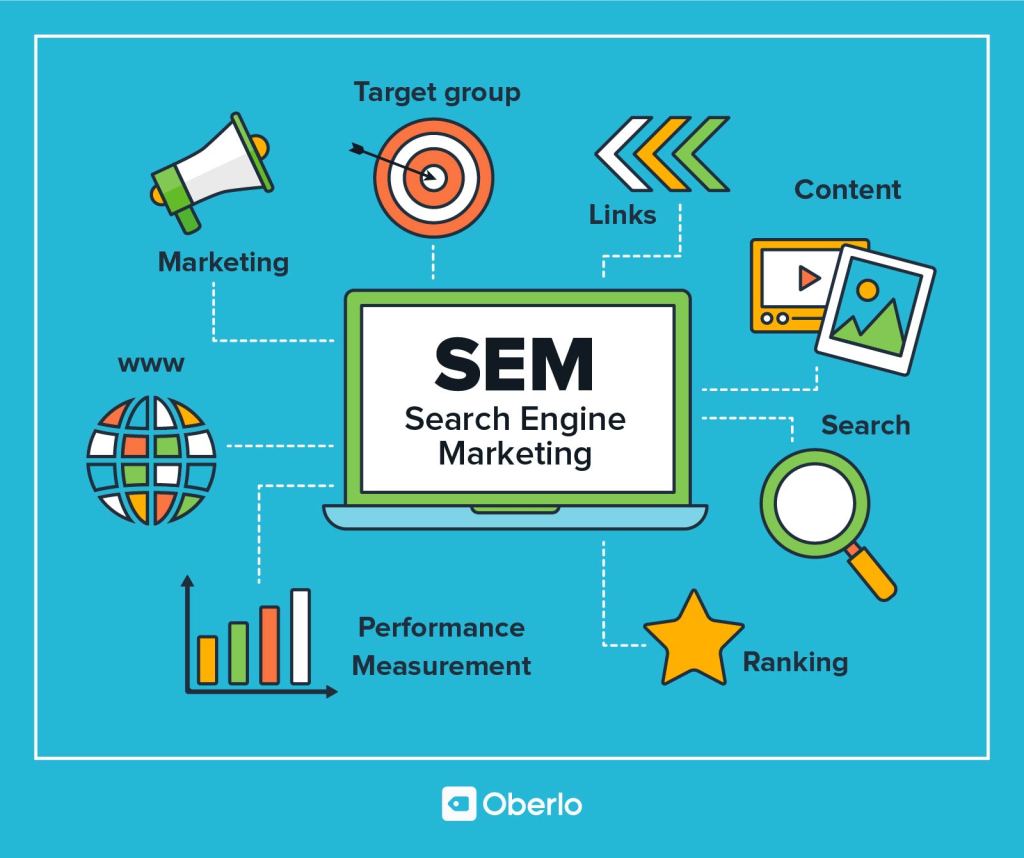
In layman term, Search Engine Marketing (SEM) is a online marketing technique where marketer spend an amount of money to promotes their website by increasing their exposure to appear higher in the search result pages (Nicole Rende, 2014).
To fully utilized SEM, marketers incorporate Search Engine Optimization (SEO) and paid search. For Example, when a potential consumer search for product via selected keywords, marketers places paid advertisement with search engine optimization into these result pages that attract the consumer.
However, companies have to bid for the selected keyword they wish to place their advertisement on and it is usually a HEFTY PRICE! (Ilya Cherepakhin,2020)
Conclusion
In conclusion, it is debatable whether which technique is best for a company. In my opinion, SEO will be a better approach. Although it will take a long period of time to show results, it is more cost efficient and better search credibility.
However, for new startup companies, i would recommend using SEM and SEO to gain quick exposure as it saves time to reach the consumers to create brand awareness.
Which technique do you think best works for your company? Feel free to leave a comment and share with me your thoughts!
In this rapid technology advancement era, information and data transferring one one device to the other in matter of seconds. Daily activities and technology are heavily intertwined together. I’ll be discussing about internet of things (IOT) and big data in this post to further understand how it can benefits us.
In a nutshell, internet of Things or IOT, is defined as the concept of connection between any device (that has an on/off switch) to the internet and to other connected system or devices.
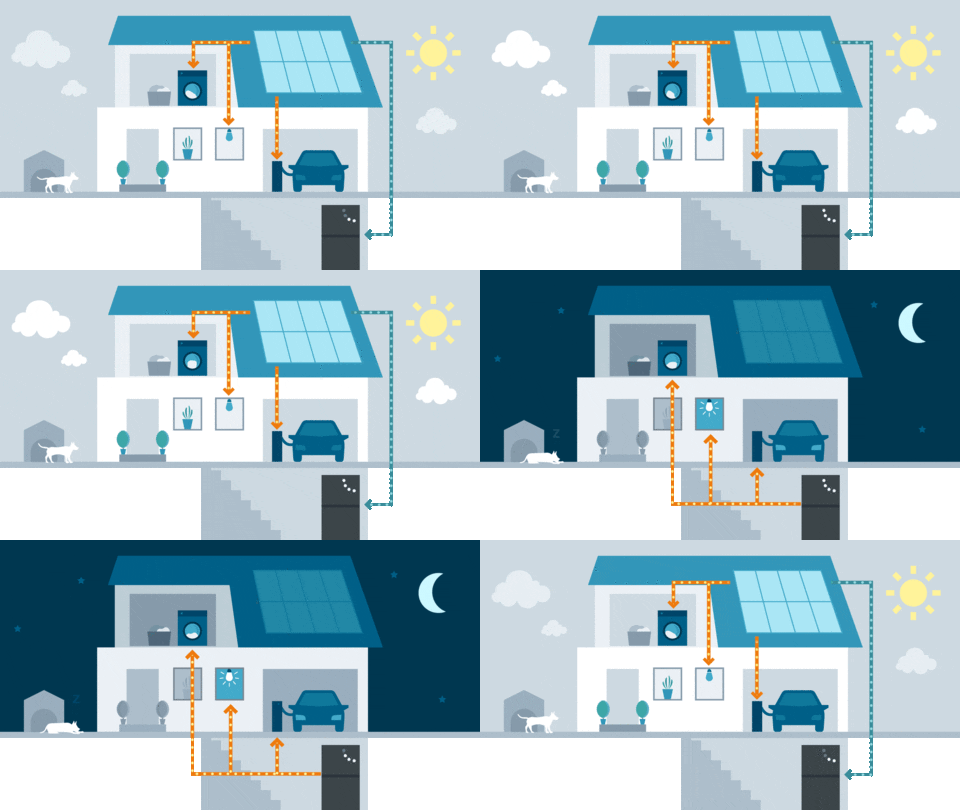
These connections allow user to interact with multiple devices at one time such as smart home to further aid us in achieving higher productivity with much convenience.
How can IOT benefit us ?
Just imagine you and your family went overseas and that’s a document for you to edit in your office computer urgently NOW ! Or leaving your home and you realized you did not switch off the water boiler ? With IOT, everything is made possible within your control now.
You can easily access to the document from your location through the network sitting from any location of the globe. People are able to work even if they are not physically present. According to TechHive, connecting devices such as Smart Home can also allow you to control electrical appliances even if you are away from home. The convenience brought will greatly assist us in productiveness.
How Marketers Use IOT
Marketers can create a completely different purchasing experience bridging the gap between physical and digital world for the consumers. Every single moves in the internet by a consumer create a digital ‘footprint’ and are transformed into data as marketers are able to further understand individual consumer better.
Consumers buying habit are analyzed across different platforms and providing real time notifications and targeted ads to attract consumers attention. The time spend by the consumers can also allow marketers to understand the purchasing and emotional journey of the consumers throughout the whole shopping experience.
Big Data
According to IBM, big data analytics is the use of advanced analytic techniques against very large, diverse data sets that include structured, semi-structured and unstructured data, from different sources, and in different sizes from terabytes to zettabytes. It is a term applied to data sets whose size or type is beyond the ability of traditional relational databases to capture, manage and process the data with low latency.
In layman’s term, an extremely huge set of data that can only be analysed computationally to reveal trends, association and patterns relating to human interactions and behavior.
Uses of Big Data
One of the uses of big data is micro-marketing; using analyzed data to identify and target a very small segments of consumers. This provides brands with data of such individuals and specifically tailor marketing mix for these segments. This will increase the relevance of product to the consumers.
Big data also provide organisations with consumer insights with simplified data by analyzing and predicting individual behavior from platforms such as social media and GPS enabled- devices. Brands can accurately target certain group of consumers and insert their product ads to attract these consumers.
According to NewGenApps, Facebook target people based on buying intent, website visits, interests, job role, demographics and what not. All this data is collected by Facebook algorithms using big data analysis techniques.
Conclusion
In conclusion, internet of things (IOT) and big data can help organisations better understand their consumers and providing better shopping experience. With the advancement of technology and ‘Smarter’ devices, this can greatly aid us in our daily activities and achieving great productivity.
Have you ever been in a situation where you tried searching for something that you really need it urgently but you just can’t find it? So you went online and you finally found it ! But you realized the delivery date have passed the date you need it. According to Amazon, it has over 30 millions item online and you can actually receive your item with same date delivery! Now that’s the power of mobile marketing.
How can we classify our mobile marketing applications and how care we fully utilized different mobile marketing tools to help us boost our product and services ?
Classification of Mobile Marketing Applications
Victims – This group of audience have high degree of consumer knowledge of the product or services. This communication method enforces information to the audience and tries to lead them to the expected direction or outcome.
Patrons – This group of audience have high degree of consumer knowledge of the product or services. The communication method uses at ‘pull’ effect; attracting consumers into buying a product or services. They are usually the brand loyal.
Strangers – Understanding that the consumers have low knowledge on product or services, provide a channel that allows them to have high exposure to it.
Groupies – With low consumer knowledge on product or services, attract consumers to interact and understand more about the brand.
Now, understanding all classifications of mobile marketing applications, which category do you think you falls in the last product you purchasing through a mobile device and which method do you think works best?
6 Mobile Marketing Tools
1) Mobile Ads
Mobile ads are the most common forms of advertisements, this includes search engine ads, in-game mobile ads, SMS notification ads, spam emails and many more. This ads are usually place in certain platforms to attract a similar form of targeted audience.
How often do you click into this ads to learn more about the product or services when it pops up ?
2) Mobile Coupons
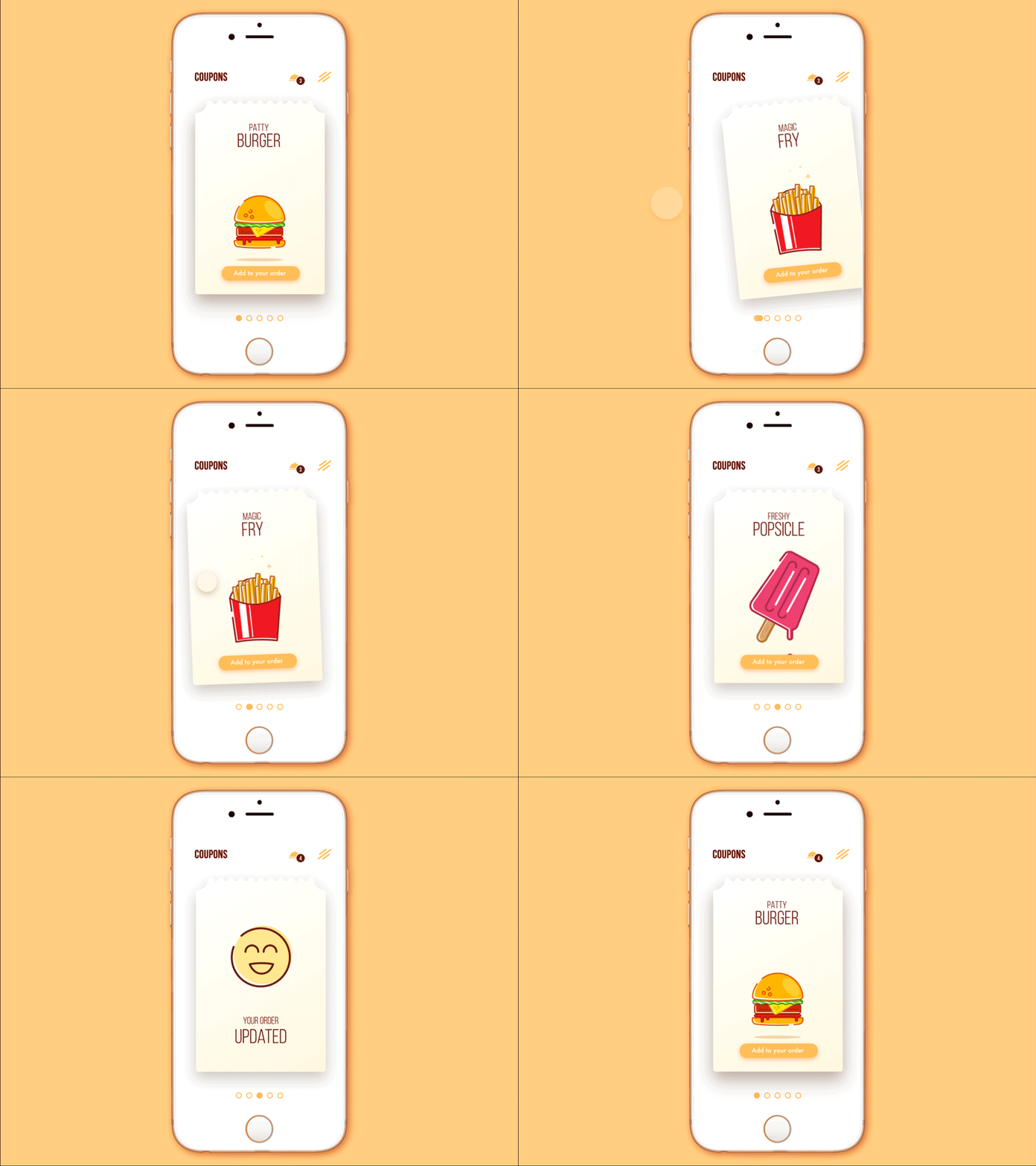
In most cases, mobile coupons are not an actual coupons, instead a promotional communication form to attract consumers curiosity. This includes offering discounts and promotions, online promotional codes, mobile coupons tied to brand loyalty programs and many more. According to MobileMarketer, mobile coupon redemption rates today exceed print coupon redemption; on average 5 to 6% percent versus paper’s 2%.
3) Mobile Websites
Mobile websites are pretty similar to any other standard websites that are browser-based HTML pages. What distinguish mobile and standard websites is that is is specifically design for an handheld device that have smaller interface and touch panel freely. It can access to mobile-specific features such as calling phone number directly or location mapping.
4) Mobile Apps
Mobile Apps are applications specifically for certain usage such as gaming, food delivery, transportation, weather forecasting and many more. Apps can extract data and content from the internet or download the content and allow user to access with internet. According to GeneXus, apps have disadvantages such as high cost, long development period and requires different programming language for different operating platforms.
5) Location-Based Mobile Marketing
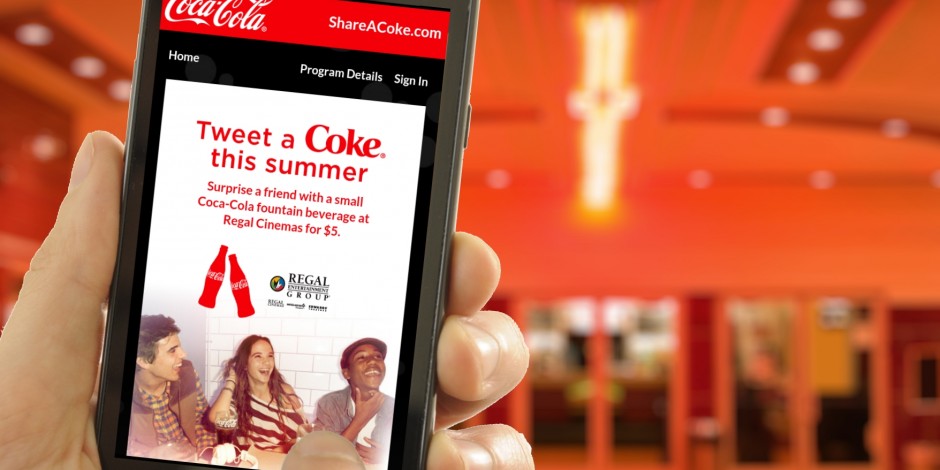
As its name suggest, location based mobile marketing uses geo-location of users in real time and provides brand information or promotions. According to MYcustomer, in 2015 Coca Cola uses a popular third party app to deliver free coke and movie tickets in Norway cinemas and had great response from the consumers.
6) Mobile Payments
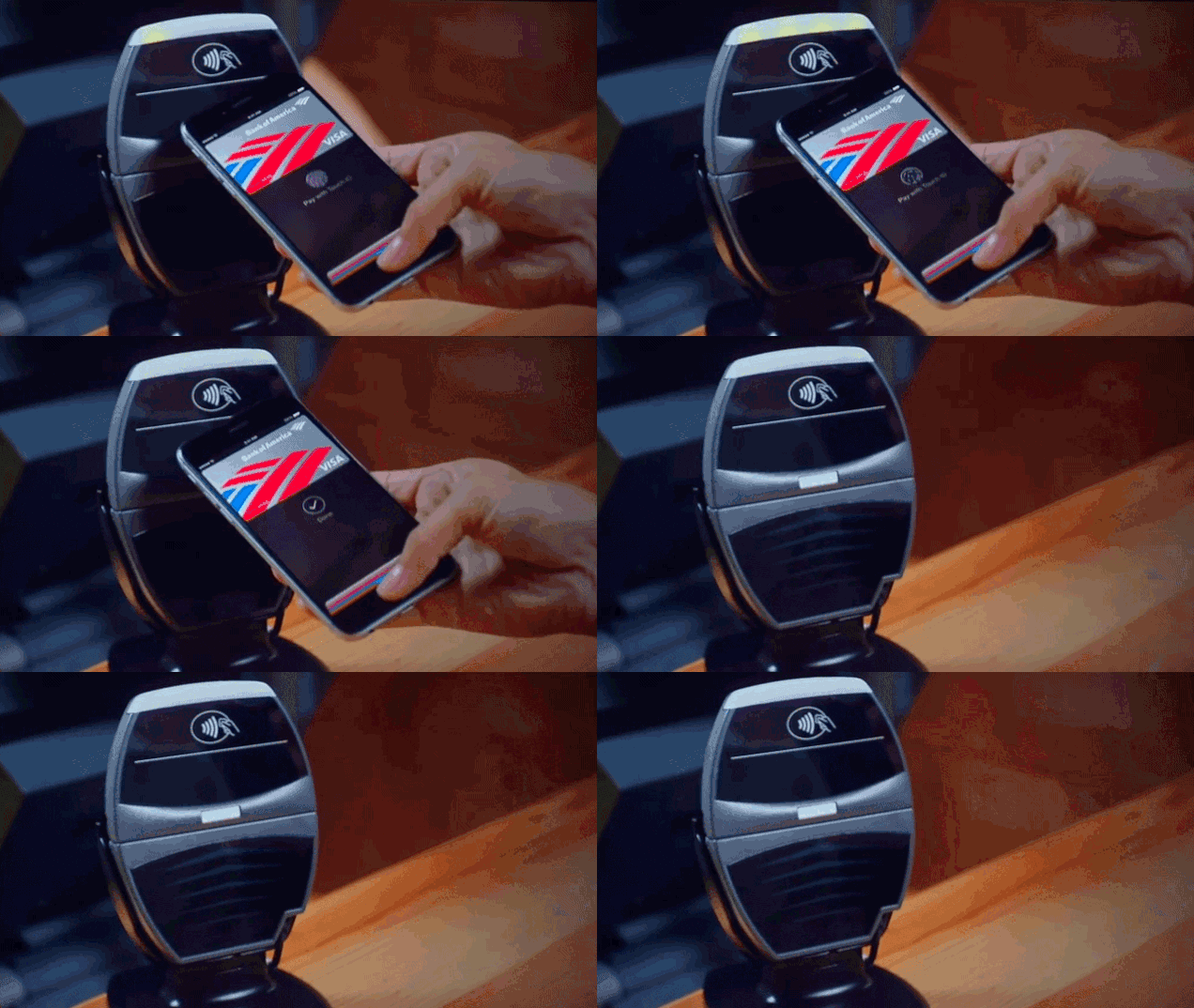
Imagine leaving your home without bringing your wallet meeting a date, how embarrassing can it be? Well, fret not cause mobile payment is as convenient as it is. Connecting your credit/debit card details to your phone can simply safe the trouble of having your wallet. You can now too take a transport or make fund transfer through your devices. According to KPMG, china’s mobile transaction volume have reached 60.5 billions in 2018.
Would you be worried about issues face during mobile payment such as payment errors or privacy issue ?
Conclusion
Mobile Marketing is essential to businesses in understanding consumers better and using it to leverage consumers behavior towards the product and services. This can help us better classified our consumers and target audience. It can also better predict consumers purchasing pattern and therefore, providing a better e-commerce experience.
Feel free to leave your thoughts or discussion in the comment box below!
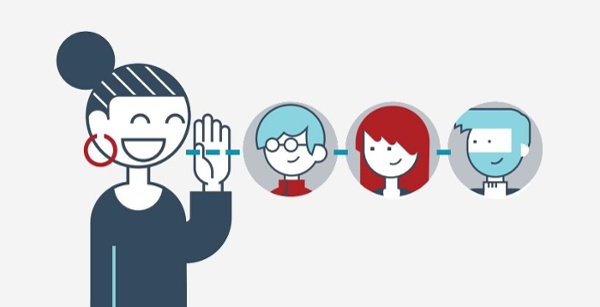
Word of Mouth (WOM) is defined as the key characteristic that between digital marketing and social media marketing. It is sharing or introducing something of interest to an targeted person. This action of sharing or introducing of a product or services are more persuasive than advertising as it is heard or seen from a trusted source that has no selling intention.
According to Buffer, in 2018, the number organic reach is very likely to be smaller than six percent. That means for every 100 fans of a page, an organic post will reach, on average, only five or fewer people (Alfred Lua, 2018)
So how can brands save money on social media marketing and still advertise their products and services effectively ?
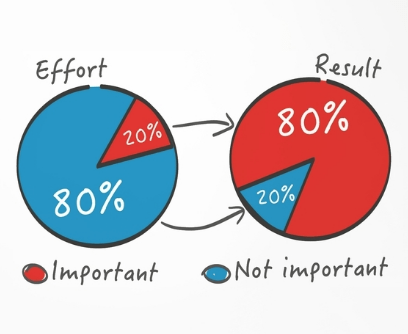
The pareto (80/20) principle states that 80% of the outcome effect come from 20% of the causes. With the right people such as connectors, market mavens, salesperson and bloggers sharing your brand product and services, company can save a substantial marketing funds.
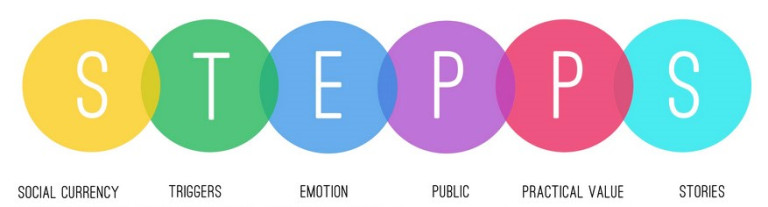
The STEPPS Framework
Social Currency
Many people share things to make others envy of their lifestyle or purchasing power in search of social approval. This product or service gives the audience an association with the person that shared and gives them ‘bragging rights’ and ‘social currency’.
Before you share a post, do you go through thoroughly if this reflects a positive or negative side of you ?
Triggers
triggers are occasion stimuli that remind the consumers about the brand product or services. The creates a top of mind awareness to the consumers and are able to connects the situation to the brand.
What is one brand that triggers you when you are in a certain situation ?
Emotions
Using physiological arousal such as excitement, amusement, anger or anxiety can also motivate sharing of content. Potential consumers exposed to this content can feel the emotional connection and encourage them to act on stimulus.
Are you a emotional animal or a content researcher ?
Public
Human beings tend to be in search for conformity. Without proper knowledge and information, many people tend to follow others in avoidance of mistake. It is a form of reassurance when you see others consuming the products.
Practical Value
According to PsychologyToday, gossip is natural, human, and indispensable (Mark Matousek 2011). Human beings enjoy sharing useful information to strengthen their relationship and social bonds. The content that are targeted to a specific group of people are more likely to be shared in comparison to the broad interest.
Stories
Stories are effective as it is an personal experience of the product and had legitimate contact with it directly. People tend to create emotional bonds or attachment to a product before purchasing the it.
Conclusion
In conclusion, organisations can fully utilize the STEPPS framework elements in their digital marketing strategies and leveraging max brand exposure using the right channels and techniques. Which elements do you think is the most effective and easiest to apply to a brand ?




















 Andrew's Digital Marketing Blog